Less Is the New More: How Owning Less Became the Coolest Thing You Can Do
There was a time — not that long ago — when the goal was more. More shoes. More fits. More stuff stacked in the corner of your room that you'd maybe get to eventually. Haul culture was practically a sport, and the person with the most options was automatically the most interesting one in the room.
That era is wrapping up. Quietly, almost without announcement, a different kind of status symbol has moved in. And it doesn't take up much space.
The Shift Nobody Really Announced
You probably noticed it before you had a name for it. A friend who shows up to every hang in the same three outfits — and somehow always looks better than everyone else. A dorm room that has, like, six things in it, and every single one of those things is exactly right. A person who, when you ask where they got something, says they've had it for three years.
That's the vibe now. Not deprivation — intention. There's a massive difference between not having stuff because you can't afford it and not having stuff because you've decided most of it isn't worth your space, your money, or your mental energy.
Gen Z, more than any generation before it, seems to genuinely understand that distinction. And they're running with it.
Why Restraint Reads as Taste
Here's the thing about owning a lot of stuff: it's actually pretty easy to do. Especially when fast fashion brands are dropping new collections every two weeks and your algorithm is constantly serving you things you didn't know you needed until thirty seconds ago. Consuming is the default. It requires almost no thought.
Choosing not to? That takes something.
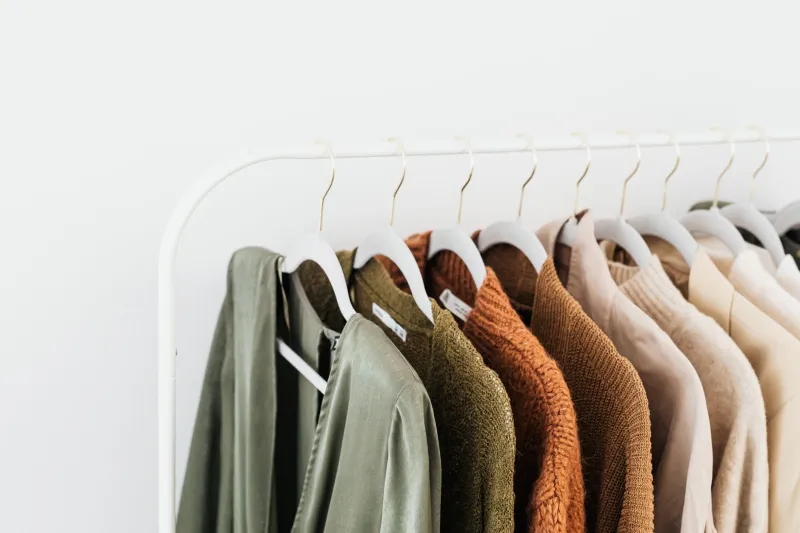
When someone has a curated closet — ten pieces that all work together, nothing random, nothing impulse-bought at 1 a.m. — it signals a level of self-knowledge that's genuinely hard to fake. You have to know what you actually like, what actually fits your life, and what you're willing to commit to long-term. That's not a shopping strategy. That's a personality.
And people can feel the difference. There's something about someone who knows exactly what they want and doesn't chase everything else that just radiates confidence. The capsule wardrobe isn't just a TikTok trend. It's a statement about who you are and how you move.
The Performative Version (And the Real One)
Okay, let's be honest for a second. Like any aesthetic that gets popular, minimalism has a performative layer. You've seen it — the "clean girl" setups where everything is beige and perfectly lit, the "intentional living" content that somehow involves a lot of expensive linen. There's a version of minimalism that's just another form of consumption, just with a more curated color palette.
But underneath the aesthetic, there's something real happening. Especially among younger people who watched their parents accumulate stuff that didn't make anyone particularly happy. Who grew up with climate anxiety baked into their worldview. Who are navigating an economy where buying less isn't just a style choice — it's sometimes a survival strategy that happens to also look cool.
The genuine version of this isn't about having a pristine apartment for the 'gram. It's about being really thoughtful about what you let into your life. It's buying one quality thing instead of three cheap things. It's wearing what you have until it genuinely needs replacing. It's recognizing that the dopamine hit from a new purchase fades fast, and the stuff you actually love — the stuff you reach for every single time — is worth a hundred impulse buys.
What It Says About Where Culture Is Heading
Minimalism as a status symbol makes a lot of sense when you think about the broader cultural moment. We're all drowning in options, in content, in noise. The person who has figured out how to filter — who has a clear enough sense of themselves to say "no, that's not for me" — is actually kind of aspirational right now.
It shows up in more than just closets, too. People are getting more intentional about their social feeds, their friend groups, their schedules. There's a through-line here: the less-is-more philosophy isn't really about stuff. It's about attention. About deciding what actually deserves yours.
And in a world where everyone is competing for your attention at all times, the person who isn't swayed by every new thing — who has a point of view and sticks to it — stands out in a way that no haul can replicate.
How to Actually Live It (Without Making It a Whole Thing)
Here's the good news: you don't have to do a dramatic closet purge or move into a tiny house to get the energy of this. It's more of a practice than a project.
Start with the next thing you almost buy. Not the thing you need — the thing you're considering. Sit with it for a week. If you're still thinking about it, maybe it's actually worth getting. If you forgot about it by Tuesday, you just saved yourself some money and some space.
Look at what you already own with fresh eyes. Chances are there are pieces in your rotation that you genuinely love and pieces that are just taking up room. The stuff you love? That's your actual style. Build from there instead of constantly adding new things to the pile.
And resist the urge to make it an aesthetic. The whole point is that it's not about how it looks to other people — it's about how it feels to you. A closet that works for your actual life is worth more than one that photographs well.
The Bottom Line
Status has always been about signaling something — taste, wealth, belonging. What's changing is what those signals mean. Right now, the most interesting signal you can send isn't about how much you have. It's about how clearly you know what you want.
That's the aesthetic of enough. Not empty. Not sparse for the sake of it. Just exactly what you need, chosen with care, and nothing else taking up the space.
Turns out that's a harder flex than any haul. And a way more lasting one.