Bored on Purpose: How Doing Nothing Is Actually How You Find Everything
There's a version of your life where every Saturday is accounted for. Brunch at noon, a rooftop thing at four, some friend-of-a-friend's birthday situation at nine. Your calendar looks productive. Your Instagram stories look full. And somewhere underneath all of it, you have absolutely no idea what you actually enjoy.
Sounds familiar, right?
Here's the thing nobody wants to say out loud: constant stimulation is quietly making people boring. Not boring like they have nothing going on — boring like they have everything going on and none of it means anything to them personally. There's a difference. And a lot of Gen Z is starting to clock it.
The Problem With Always Having Plans
FOMO built its whole reputation on the idea that missing out is a loss. Skip the party, miss the moment. Don't show up, get left behind. It's been the social operating system for the better part of a decade, and it worked — kind of. People showed up. They stayed busy. They collected experiences like they were going for some invisible high score.
But here's what nobody factored in: when you're always reacting to what's available, you never actually get to figure out what you want. You're just responding. The calendar fills itself, the weekends disappear, and somehow you end up at 24 or 27 feeling like you've done a lot without landing anywhere in particular.
The counterintuitive fix? Say no to more stuff. On purpose.
What Strategic Boredom Actually Looks Like
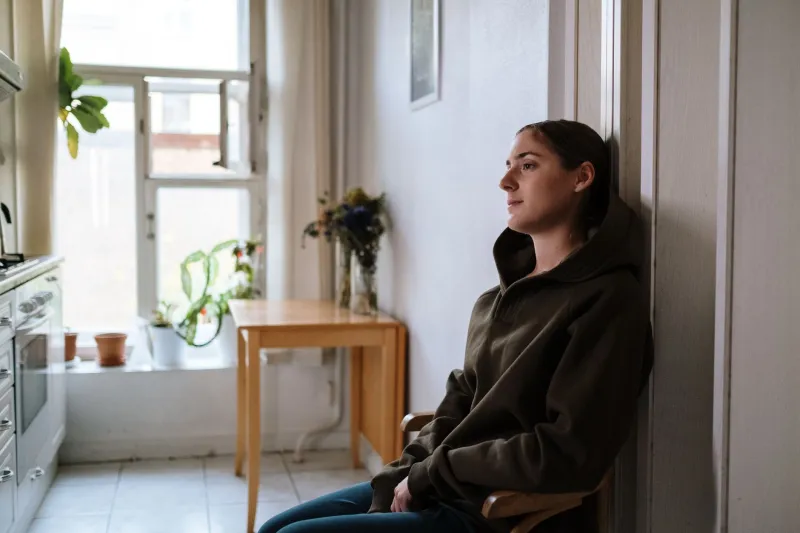
This isn't about being a hermit or pretending you hate people. Strategic boredom is more specific than that. It's the intentional act of leaving your schedule genuinely empty — not filling gaps with scrolling or background TV, but actually sitting in the discomfort of having nothing required of you.
No agenda. No optimization. Just... open time.
At first, it feels wrong. Maybe even a little anxious. Your brain starts reaching for something to do, someone to text, somewhere to be. That restlessness? That's the whole point. Because once you push through it, something interesting happens: you start gravitating toward things. Not things you think you should like, or things that look good in a caption — actual things that just pull your attention for no external reason.
Maybe you start sketching. Maybe you end up on a three-hour deep dive about the history of jazz drumming. Maybe you figure out that you actually love cooking but only ever ordered delivery because you never had an unscheduled Tuesday night to experiment. The discovery process only works when you're not filling every available second with pre-packaged content and social obligations.
The Boring Baseline Life
Some people are calling it a "boring baseline" — a deliberately low-stimulation default state that makes it easier to notice what genuinely excites you. Think of it like noise reduction. When everything is loud all the time, you can't hear anything clearly. But quiet down the background, and suddenly you can pick out the specific sounds that actually matter to you.
This isn't a new concept. Artists, writers, and musicians have been talking about the necessity of boredom for decades. But it's landing differently for a generation that grew up with infinite content available at all times. The access never went away — the choice to not use it is the radical part.
A lot of people who've tried this describe a weird adjustment period. The first few weekends feel uncomfortable, even pointless. But by the third or fourth, something shifts. Routines start forming around things they actually chose. They find themselves looking forward to those routines in a way they never looked forward to whatever the group chat had planned.
Why This Is a Community Thing Too
Here's the part that surprises people: doing less doesn't make you lonelier. It actually tends to sharpen the social connections that matter.
When you're not obligated to show up everywhere, the places you do show up carry weight. You're there because you want to be. The people you're with are people you actively chose. That changes the energy of those interactions completely — less performative, more genuine.
And when you start developing actual interests through all that intentional downtime, you find your way into communities built around those interests. Not the broad, generic social circles held together by proximity or habit, but specific groups of people who care about the same weird, specific thing you just discovered about yourself. That's where real connection tends to live.
It's also why a lot of the most interesting people you'll meet seem weirdly calm about their social lives. They're not chasing invitations or stacking their weekends. They're operating from a place of knowing what they like and building toward it — and that kind of groundedness is genuinely magnetic.
The JOMO Upgrade
JOMO — the Joy of Missing Out — has been floating around as a concept for a while, but this goes a step further. It's not just enjoying staying home. It's using that space with some intention, even if the intention is just to see what surfaces.
The upgrade is the strategic part. You're not avoiding life. You're creating conditions where your actual life can figure out what it wants to be. There's a big difference between passive avoidance and active space-making.
Some practical ways people are doing this: blocking out full weekend days with no plans allowed, committing to phone-free mornings for a month, turning down social invitations that feel obligatory rather than genuinely exciting, or just sitting with the discomfort of an empty evening instead of immediately filling it.
None of this is glamorous. That's kind of the point.
Give It a Few Boring Weeks
If you've been feeling like you're doing a lot but building toward nothing, the answer probably isn't to do more. It's to do less, slower, and with more patience for what shows up in the gaps.
The people who know themselves best — who have the hobbies that feel like genuine identity, the friend groups that actually fit, the creative projects that came from somewhere real — didn't find those things by optimizing their schedules. They found them in the unplanned hours, the boring stretches, the moments when they had nothing to do and had to figure out what they actually wanted.
Boredom, done on purpose, is kind of the most productive thing you can do. Don't tell the productivity crowd.